


San Francisco and San Joaquin Valley Railway Co. issued to and signed by A.B. Spreckels - 1895 dated Autographed Stock Certificate
Inv# AG1874C Autograph
Stock issued to and signed by A.B. Spreckels on back and John D. Spreckels on back as well. Signed by B. Spreckels on front and back. Certificate #3! Large size stock measures 19" x 12 1/4" including stub at left. Four $5 revenue stamps on front!
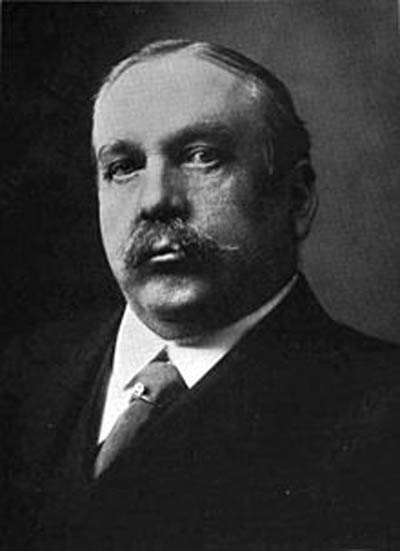
Adolph Bernard Spreckels (January 5, 1857 – June 28, 1924) was a California businessman who ran Spreckels Sugar Company and who donated the California Palace of the Legion of Honor art museum to the city of San Francisco in 1924. His wife Alma was called the "great grandmother of San Francisco". His 55-room mansion, built in 1913 in Pacific Heights is the current home of novelist Danielle Steel. Spreckels was born in San Francisco, California. His parents were Anna Christina Mangels and Claus Spreckels, founder of the Spreckels Sugar Company. At the age of 12, Adolph studied abroad in Hanover, Germany for two years, returning to San Francisco to finish his studies. When the company was founded in 1881, he was named a vice-president. Spreckels succeeded his father as company president upon the latter's death in 1908. He was intensely loyal to both his father and his brother John. In 1884, he shot Michael H. de Young, co-founder of the San Francisco Chronicle, supposedly because of an article in that newspaper suggesting his sugar company defrauded its shareholders. Spreckels pleaded temporary insanity to the charge of attempted murder and was acquitted. The California Palace of the Legion of Honor was championed by his wife Alma and paid for from the Spreckels fortune. It was merged with the M. H. de Young Memorial Museum in 1972 to become the Fine Arts Museums of San Francisco. Besides the sugar company, Spreckels was president of the San Francisco and San Mateo Electric Railway, vice-president of both the Western Sugar Company and the Oceanic Steamship Company, as well as a director of the Sunset Monarch Company. In addition to his business enterprises, Spreckels served as a San Francisco Park Commissioner and was heavily involved in the development of Golden Gate Park. Spreckels Lake, in the park, is named after him. Spreckels Organ Pavilion in San Diego's Balboa Park, housing the largest outdoor pipe organ in the world, was also built by Spreckels and his brother John. Furthermore, his brother John commissioned Spreckels Organ in honor of Adolph, who died before it was completed.
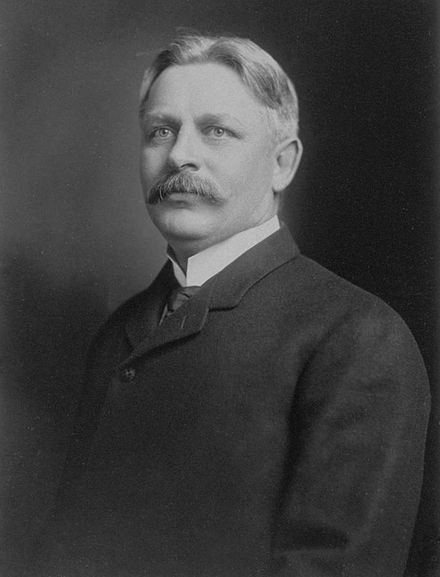
John Diedrich Spreckels (August 16, 1853 – June 7, 1926), the son of German-American industrialist Claus Spreckels, founded a transportation and real estate empire in San Diego, California, in the late 19th and early 20th centuries. The entrepreneur's many business ventures included the Hotel del Coronadoand the San Diego and Arizona Railway, both of which are credited with helping San Diego develop into a major commercial center.
Upon his death he was eulogized as "One of America's few great Empire Builders who invested millions to turn a struggling, bankrupt village into the beautiful and cosmopolitan city San Diego is today. In 1880, with $2 million in capital, he organized J. D. Spreckels and Brothers, a company to establish a trade between the mainland United States and the Hawaiian Islands. The company began with one sailing vessel, the Rosario, and later controlled two large fleets of sail and steam ships. The firm also engaged extensively in sugar refining, and became agents for leading sugarcane plantations in Hawaii. Much of the development of commercial interests between the United States and Hawaii is due to this firm.
The shipping and passenger line of this enterprise was the Oceanic Steamship Company, which was founded by J.D. Spreckels in 1881. Its inaugural service was between California and Hawaii and, later, also from California to Australia, New Zealand, Samoa and Tahiti. The various of the lines’ ships transported passengers, sugar and/or other food cargoes and provided mail service. For decades, the company provided the only mail service between the U.S. and Australia and New Zealand. The Oceanic ships that transported mail to Australia and New Zealand were the Alameda (3000 horsepower plant), Mariposa (3000 horsepower plant), the steamer Zealandia, the Sierra, the Sonoma and the Ventura. The Australia provided a 33-day direct mail service to Tahiti. In 1926 Oceanic became a subsidiary of Matson Navigation Company, a company which J.D.’s father—Claus Spreckels—had early financed. Prior to its becoming associated with Matson, Oceanic had under J.D.’s control owned a total 17 ships, which were the iron ship Alameda (1883), the wood schooner Anna (1881), the iron steamer Australia (1875), the wood brigantine Claus Spreckels (1879), the wood brigantine Consuelo (1880), the wood brigantine Emma Augusta (1867), the wood brigantine John D. Spreckels (1880), the iron ship Mariposa (1883), the two mast schooner Rosario (1879), the wood brigantine Salina, the passenger ship Sierra (1900), the passenger liner Sonoma (1900), the Suez (1876), the Ventura (1900), the wood brigantine W.H. Dimond (1881), the wood brigantine William G. Irwin (1881), and the Zealandia (1875).
In October 1877, John Diedrich Spreckels married Lillie Siebein in Hoboken, New Jersey, and together they had four children: Grace (born September 1878), Lillie (born November 1879), John (born April 1883), and Claus (born March 1888). They first lived in the Kingdom of Hawaii and then in San Francisco. In 1887, Spreckels visited San Diego on his yacht Lurline to stock up on supplies. Impressed by the real estate boom then taking place, he invested in the construction of a wharf and coal bunkers at the foot of Broadway (then called "D" Street). That boom ended soon but Spreckels' interest in San Diego would last for the rest of his life.
He acquired control of the Coronado Beach Company, the Hotel del Coronado and Coronado Tent City; he bought the San Diego street railway system, changing it from horse power to electricity, in 1892. The Hotel del Coronado was owned by the Coronado Beach Company which was originally capitalized with US$3 million. At the time of capitalization the original company directors were E.S. Babcock, John D. Spreckels, Captain Charles T. Hinde, H.W. Mallett, and Giles Kellogg. The Coronado Beach Company was responsible for numerous other investments in the Coronado, California, area. Before investing in the Coronado Beach Company, Spreckels waited for his close friend—Captain Charles T. Hinde—to join him. They jointly invested and managed new businesses.
For a time, Spreckels was owner of the San Francisco Call, then a morning newspaper. While still living in San Francisco, he continued investing in San Diego newspapers, buying The San Diego Union in 1890 and the San Diego Evening Tribune in 1901. He moved his family permanently to San Diego immediately after the 1906 San Francisco earthquake.
In the next decades, Spreckels became a millionaire many times over, and the wealthiest man in San Diego. At various times he owned all of Coronado Island, the San Diego-Coronado Ferry System, the Union-Tribune Publishing Co., the San Diego Electric Railway, the San Diego & Arizona Railway, and Belmont Park in Mission Beach. He built several downtown buildings, including the Union Building in 1908, the Spreckels Theater Building in 1912, the Hotel San Diego, and the Golden West Hotel. He employed thousands of people and at one time he paid 10% of all the property taxes in San Diego County.
Spreckels was president of several companies, including the Oceanic Steamship Company, operating a mail and passenger line to Hawaii and Australia, the Western Sugar Refining Company, the Coronado Water Company, the San Diego and Coronado Ferry Company, the San Diego and Coronado Transfer Company, the Pajaro Valley Consolidated Railroad Company, the San Diego Electric Railway, and the San Diego & Arizona Railway Company. The San Diego Electric Railway (SDERy) was a San Diego-based, light rail mass transit system founded by Spreckels in 1892. Spreckels' strategy involved buying up several failed downtown horse- and cable-drawn trolley routes, consolidating and standardizing the trackage, and electrifying resulting unified street railway system.




Ebay ID: labarre_galleries