


Legal Document signed by Thomas Heyward Jr. - Signer of the Declaration of Independence - 1785 dated Autograph
Inv# AU1900 Autograph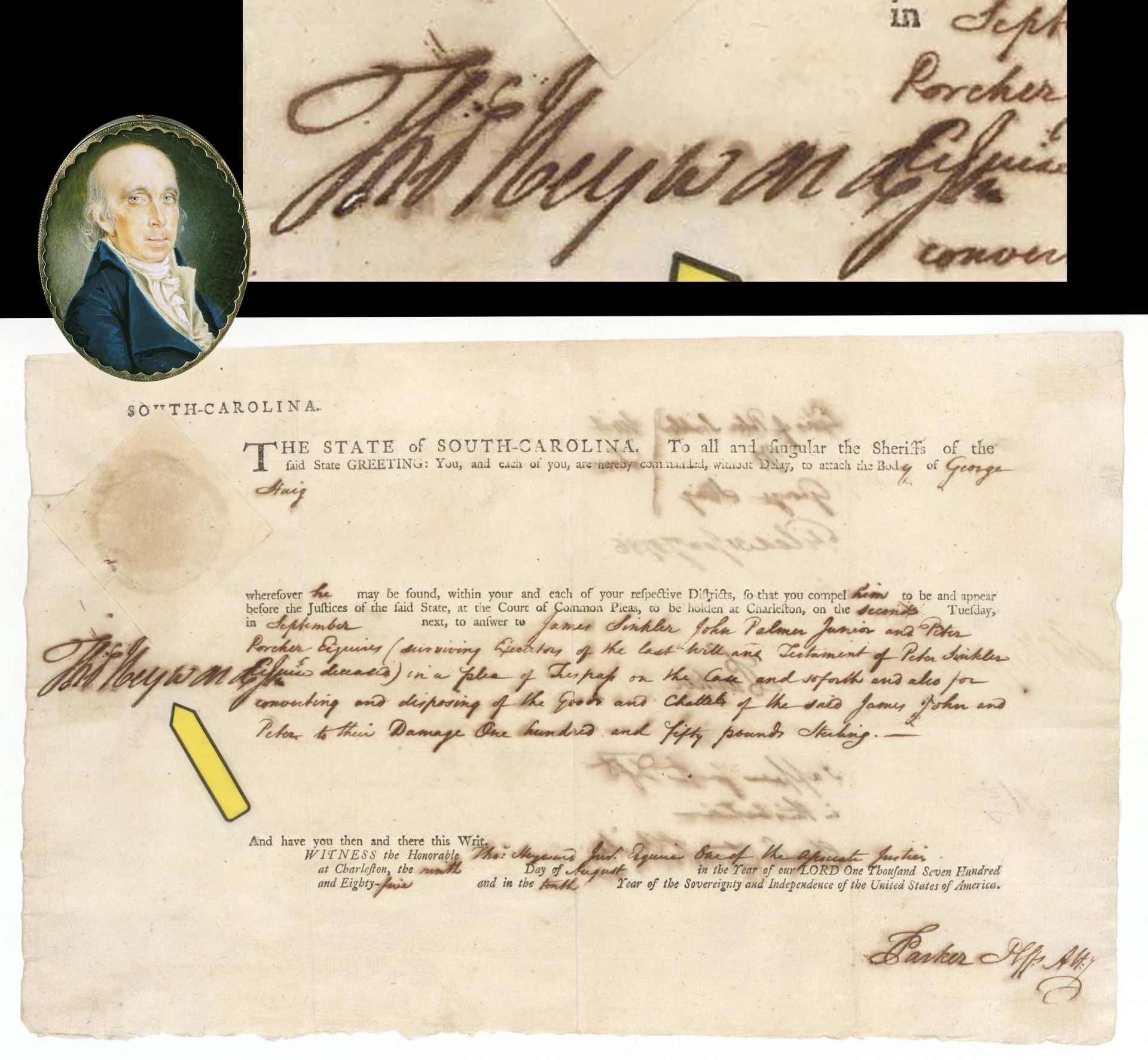
Legal document signed by Thomas Heyward Jr., signer of the Declaration of Independence.
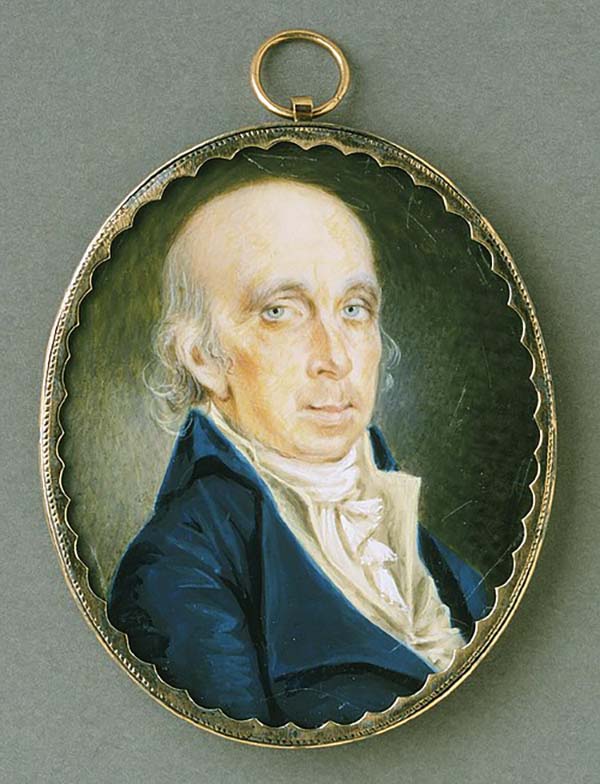
Thomas Heyward Jr. (July 28, 1746 – March 6, 1809) was an American Founding Father, lawyer, jurist, and politician. Heyward was active politically during the Revolutionary Era. As a member of the Continental Congress representing South Carolina, he signed the Declaration of Independence and Articles of Confederation. Heyward's imprisonment in Florida by the British for nearly a year and the loss of a considerable number of slaves led to his being proclaimed a martyr of the revolution. Heyward was born in St. Luke's Parish (now known as Jasper County), South Carolina, the son of Mary (Miles) and Daniel Heyward. He was educated at home, then traveled to England to study law where he was a member of the Honourable Society of the Middle Temple. He was elected to the Continental Congress in 1775 and the following year was the last delegate to sign the Declaration of Independence.
Heyward returned to South Carolina in 1778 to serve as a judge. In 1778, he presided over a trial in which several persons were tried for treason; they were convicted and executed within view of the British lines. In command of a militia force, he was taken prisoner by the British during the siege of Charleston. On August 27, 1780, British troops took him from his Charleston home (presently owned by the Charleston Museum) at 87 Church Street and detained him in the Old Exchange Building. They confiscated all of his slaves, and although he later reclaimed some of them, 130 were permanently confiscated and transported to sugar plantations in Jamaica, a loss of $50,000 in property. It was this loss of slaves that resulted in his being later proclaimed by the press as a martyr of the revolution. Hours after being arrested, he and 28 other "ringleaders of the rebellion" were relocated to a guard ship in the harbor. On September 4, they were transported to St. Augustine, Florida, and remained there for about 11 months until they were freed in a prisoner exchange. While in prison, Heyward transposed a popular English song, "God Save the King" into "God Save the States".
In 1784, he was elected a member of the American Philosophical Society. He continued to serve as a judge after the war, retiring from the bench in 1798. He is buried at Old House Plantation near Ridgeland, South Carolina. The house was added to the National Register of Historic Places in 1997.
In 1970, when the Supreme Court ordered that public schools must be integrated, a group associated with the White Citizen's Council opened a school named Thomas Heyward Academy in Ridgeland, South Carolina.




Ebay ID: labarre_galleries