


$30 Continental Currency dated Sept. 26, 1778 - U.S. Paper Money
Inv# CR1032 Paper Money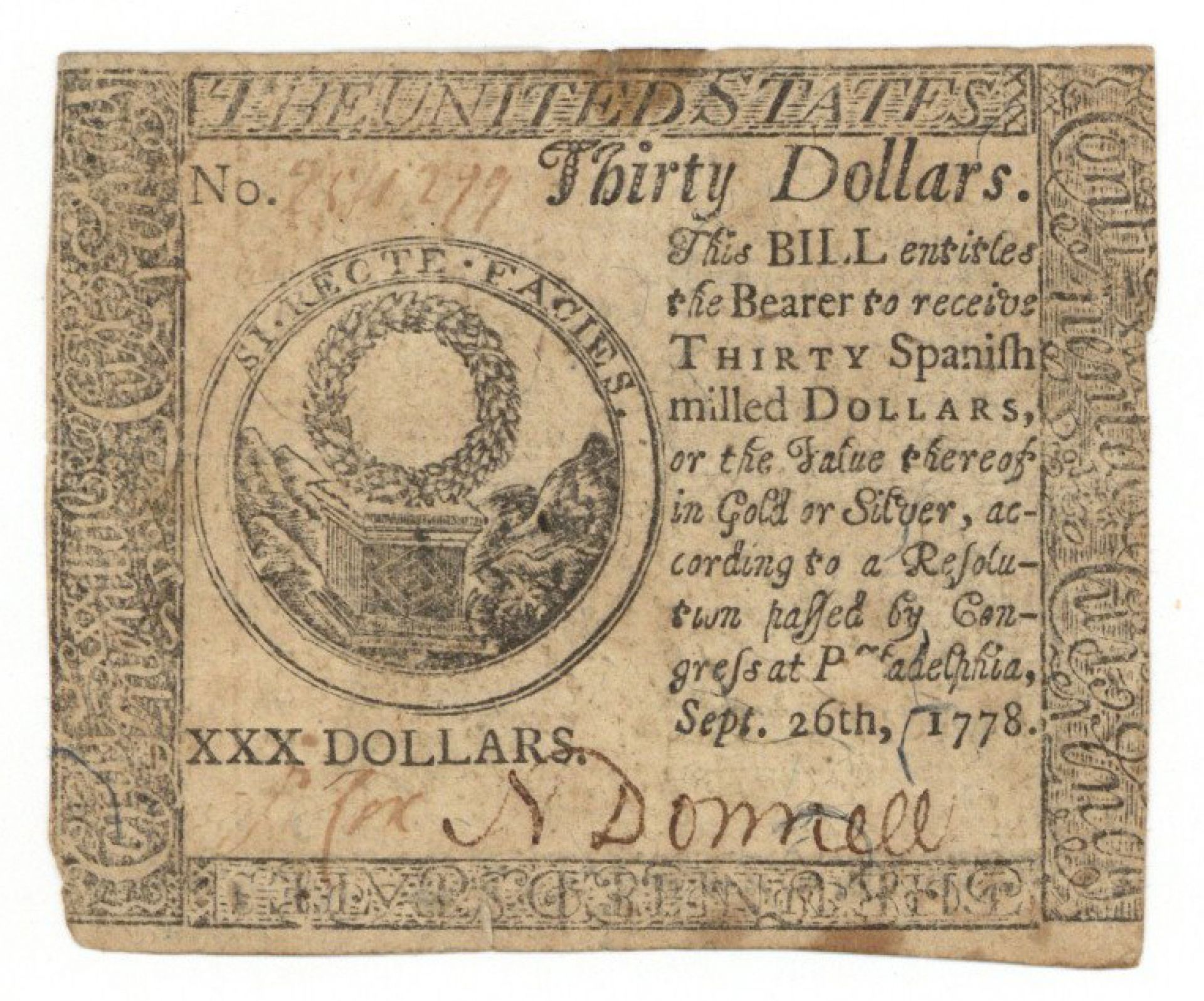
30 Dollars. Minor stain. Early American currency underwent several stages of development during the colonial and post-Revolutionary history of the United States. In 1652, John Hull, authorized by the Massachusetts legislature, minted the earliest coinage of the colony, including the willow, oak, and pine tree shilling. However, due to limited coin production in the Thirteen Colonies, which later became the United Colonies and then the United States, foreign coins like the Spanish dollar were widely circulated. Colonial governments occasionally issued paper money to facilitate economic activities.
In response to the growing economic demands, the British Parliament passed Currency Acts in 1751, 1764, and 1773 to regulate colonial paper money. During the American Revolution, the Colonies gained independence and no longer faced arbitrary monetary regulations from the British Parliament. Consequently, the states began issuing paper money to finance military expenses. The Continental Congress also issued paper money, known as Continental currency, to support the war effort.
The rapid printing of currency by the State and Continental governments to meet the war’s monetary demands led to its depreciation. By the end of the war, these paper notes became virtually worthless. British counterfeiting gangs further contributed to the decline in their value. By the time the war concluded, only a few counterfeiters had been apprehended and executed for their crimes.




Ebay ID: labarre_galleries