


United States Steel Corporation - Will of Andrew Carnegie - $100,000 Bond issued to Home Trust Co., Hoboken, NJ Trustee under the Will of Andrew Carnegie for Frank M. Wilmot - 1920 dated US Steel Corp. Gold Bond
Inv# AG1502 Bond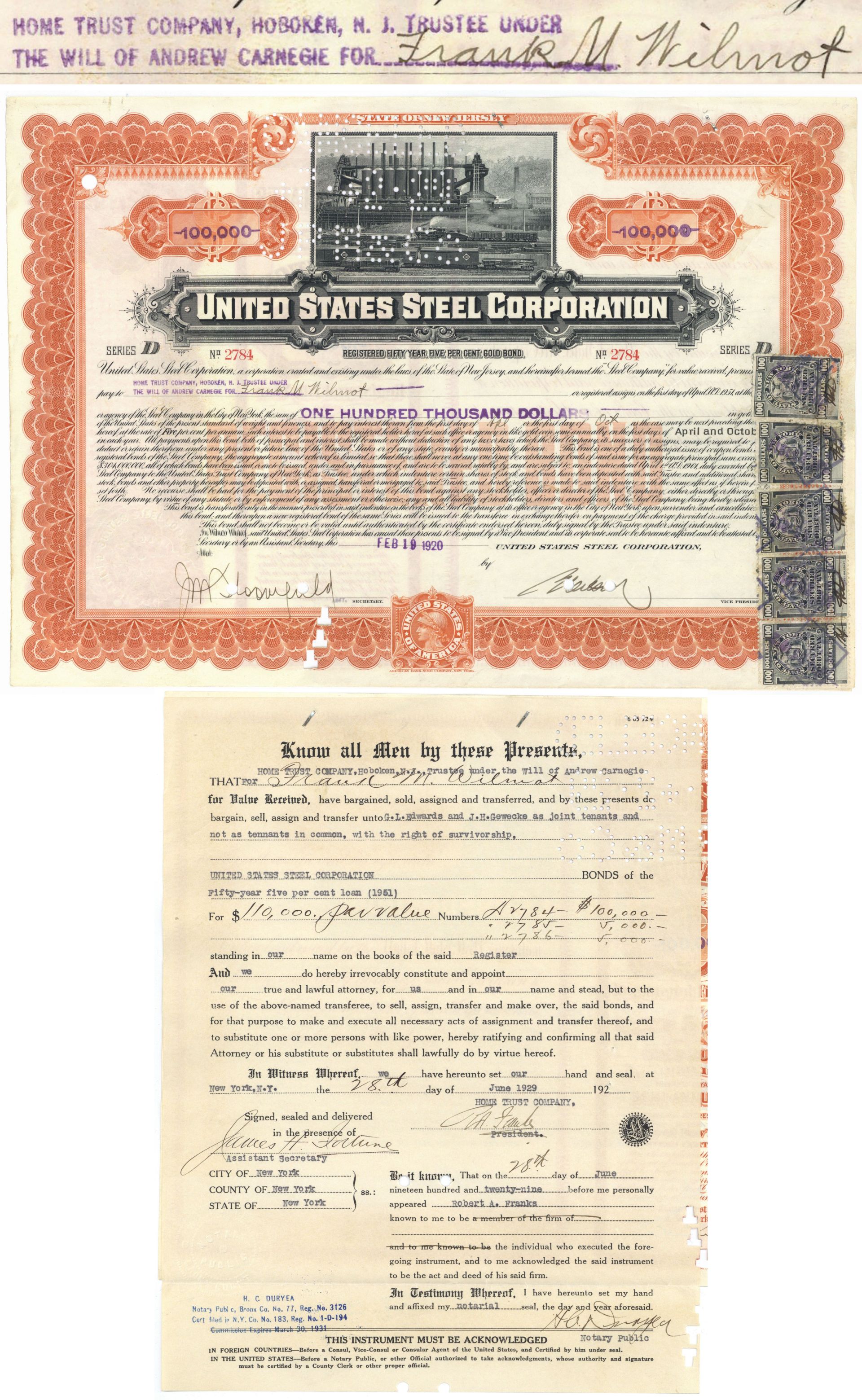
$100,000 Bond issued to "Home Trust Co., Hoboken, NJ Trustee under the will of Andrew Carnegie for Frank M. Wilmot" Important!
Frank M. Wilmot (1872–1930) was a prominent Pittsburgh administrator renowned for his unwavering commitment to Andrew Carnegie’s philanthropic vision. Born in New Jersey, Wilmot relocated to Pittsburgh around 1900 and initially served in the volunteer relief department of the Pennsylvania Railroad. His career reached its pinnacle when he became a close confidant and trusted associate of Carnegie. In 1904, Carnegie appointed Wilmot as the inaugural manager, secretary, and trustee of the Carnegie Hero Fund Commission upon its establishment. Under Wilmot’s leadership, the commission became a beacon of recognition for civilian altruism, famously providing substantial relief funds to the survivors of the catastrophic 1907 Monongah Mine Disaster, the deadliest industrial accident in American history.
While primarily celebrated for his contributions to the Hero Fund, Wilmot’s professional life was intricately connected to the steel industry ecosystem that Carnegie had meticulously built through his business ventures. Although Carnegie sold his vast steel interests to form the United States Steel Corporation in 1901, Wilmot remained a pivotal figure in managing the charitable legacy that those steel profits funded. He resided at the Park Mansion in Pittsburgh and continued to lead the Hero Fund until his untimely demise from heart disease in October 1930. Today, Wilmot is remembered as a central figure in early 20th-century American philanthropy, ensuring that the “Hero Fund” effectively translated Carnegie’s “Gospel of Wealth” into tangible support for individuals who demonstrated extraordinary acts of bravery.
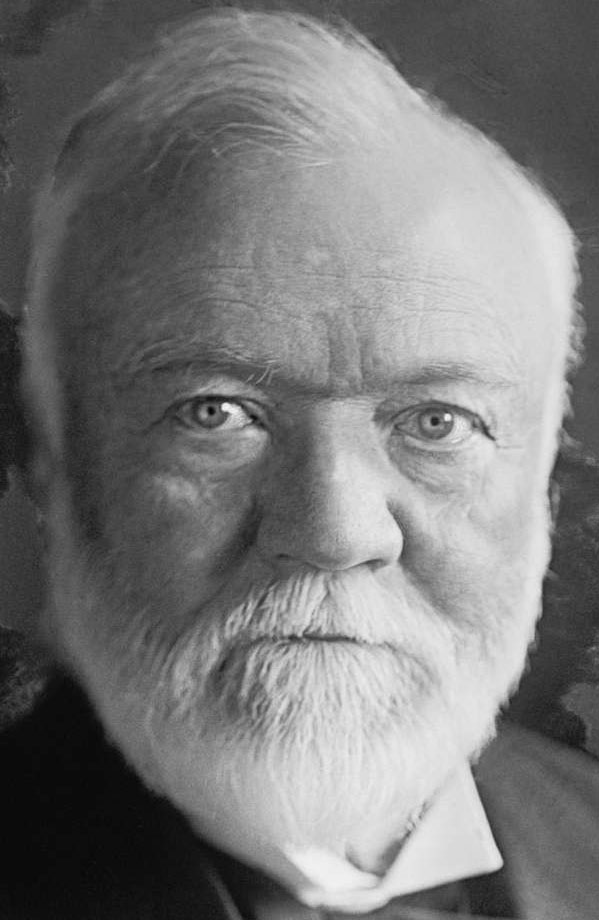
Andrew Carnegie (1835-1919), Manufacturer and Philanthropist. Born in 1835 in a modest cottage in Dunfermline, Scotland, Andrew Carnegie epitomized the quintessential “rags-to-riches” narrative of the American Dream. In 1848, his family migrated to Pennsylvania, where a young Carnegie commenced his career as a bobbin boy in a cotton mill, earning a meager $1.20 per week. Through relentless networking, sharp intellect, and astute investments in the railroad and oil industries, he eventually shifted his focus to steel production. By introducing the Bessemer process, which enhanced the efficiency and affordability of steel production, he founded the Carnegie Steel Company. This innovation revolutionized American infrastructure, contributing to the construction of iconic skyscrapers, bridges, and railroads during the Gilded Age.
In 1901, Carnegie achieved the zenith of his industrial career by selling his company to J.P. Morgan for a staggering $480 million. This transaction resulted in the formation of U.S. Steel, the world’s inaugural billion-dollar corporation. However, the latter part of his life was characterized by his philosophy of the “Gospel of Wealth.” Carnegie contended that the affluent had a moral obligation to distribute their wealth for the benefit of society. True to his convictions, he dedicated his retirement to philanthropy, donating an impressive sum of over $350 million—approximately 90% of his fortune. His enduring legacy endures through the establishment of over 2,500 public libraries, Carnegie Mellon University, and various endowments dedicated to international peace and scientific research.
A bond is a document of title for a loan. Bonds are issued, not only by businesses, but also by national, state or city governments, or other public bodies, or sometimes by individuals. Bonds are a loan to the company or other body. They are normally repayable within a stated period of time. Bonds earn interest at a fixed rate, which must usually be paid by the undertaking regardless of its financial results. A bondholder is a creditor of the undertaking.




Ebay ID: labarre_galleries