


Daniel M. Harkness issued to and signed Standard Oil Trust signed twice by Henry M. Flagler & once by John D. Rockefeller - 1882 dated Autograph Stock Certificate
Inv# AG2843 Autograph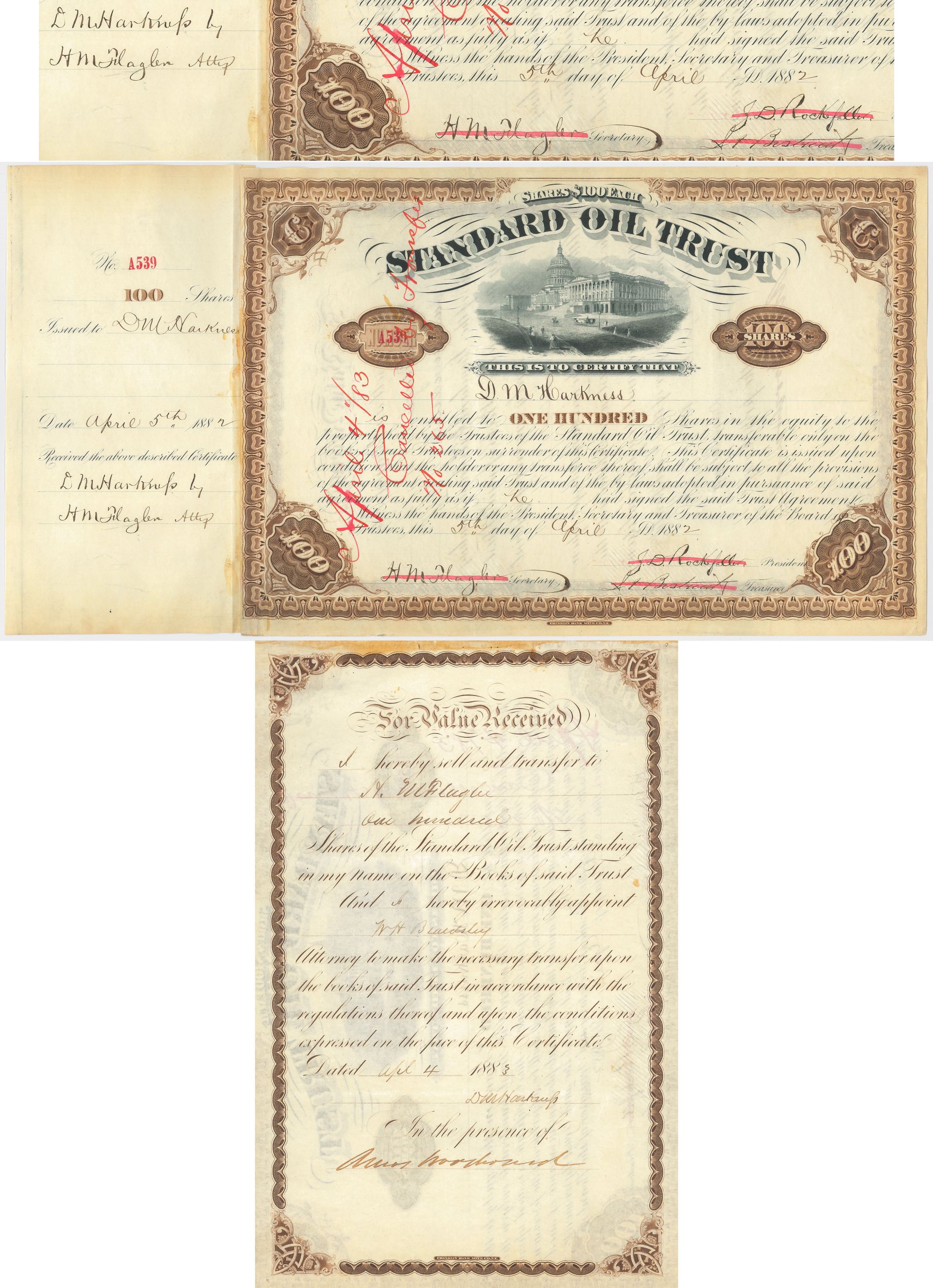
Stock issued to Daniel M. Harkness and signed at back. Also signed by Henry M. Flagler twice and transferred to him. John D. Rockefeller signs as president.

John D. Rockefeller (1839–1937), an American industrialist and philanthropist, revolutionized the oil industry and became widely regarded as the wealthiest American in history. Born in Richford, New York, he moved to Cleveland, Ohio, in 1863, where he entered the nascent oil refining business. Recognizing the industry’s chaotic nature, Rockefeller employed ruthless efficiency and aggressive expansion strategies, including horizontal and vertical integration, to stabilize the market. In 1870, he founded the Standard Oil Company, which swiftly rose to dominate the U.S. petroleum market, controlling approximately 90 percent of all oil production and refining by the early 1880s through the establishment of the first significant business trust.
Despite facing intense criticism from muckrakers like Ida Tarbell and undergoing a major antitrust breakup ordered by the Supreme Court in 1911, Rockefeller’s impact on modern corporate practices remains profound. After retiring from daily operations in the mid-1890s, he channeled his organizational brilliance into philanthropy, donating over $500 million to educational, medical, and religious causes. He founded the University of Chicago and the Rockefeller Institute for Medical Research (now Rockefeller University), leaving a lasting philanthropic legacy that continues to modernize public health and education. At the age of 97, Rockefeller’s complex legacy encompasses both the ruthless accumulation of wealth and pioneering, systematic charity.

John D. Rockefeller (1839–1937), an American industrialist and philanthropist, revolutionized the oil industry and became widely regarded as the wealthiest American in history. Born in Richford, New York, he moved to Cleveland, Ohio, in 1863, where he entered the nascent oil refining business. Recognizing the industry’s chaotic nature, Rockefeller employed ruthless efficiency and aggressive expansion strategies, including horizontal and vertical integration, to stabilize the market. In 1870, he founded the Standard Oil Company, which swiftly rose to dominate the U.S. petroleum market, controlling approximately 90 percent of all oil production and refining by the early 1880s through the establishment of the first significant business trust.
Despite facing intense criticism from muckrakers like Ida Tarbell and undergoing a major antitrust breakup ordered by the Supreme Court in 1911, Rockefeller’s impact on modern corporate practices remains profound. After retiring from daily operations in the mid-1890s, he channeled his organizational brilliance into philanthropy, donating over $500 million to educational, medical, and religious causes. He founded the University of Chicago and the Rockefeller Institute for Medical Research (now Rockefeller University), leaving a lasting philanthropic legacy that continues to modernize public health and education. At the age of 97, Rockefeller’s complex legacy encompasses both the ruthless accumulation of wealth and pioneering, systematic charity.
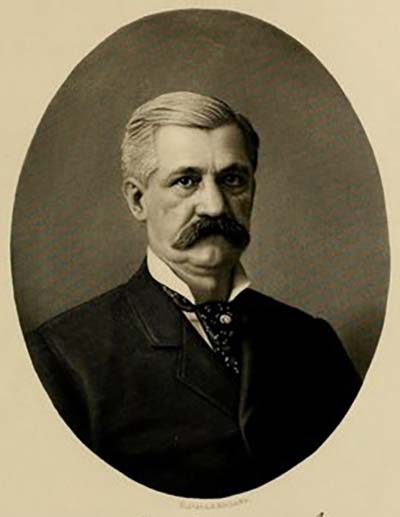
Daniel M. Harkness (September 26, 1822 – August 5, 1896) was a prominent American merchant, businessman, and a key figure in the early development of the Ohio oil industry. Born in Milan, Ohio, Harkness moved to Bellevue, Ohio, in 1837, where he established himself in general merchandise, grain, and distillery businesses. He played a crucial role in the rise of the Standard Oil empire by persuading his younger half-brother, Henry M. Flagler, to join him in Ohio. Flagler subsequently met John D. Rockefeller and Stephen V. Harkness (Daniel’s older half-brother). Harkness became a major stockholder, trustee, and key investor in the Standard Oil Trust, amassing a substantial fortune that made him one of the wealthiest individuals of the Gilded Age.
Beyond his business endeavors, Daniel Harkness was actively involved in local affairs and development. He served as the regimental quartermaster for the Union during the Civil War from 1861 to 1863. While his brother-in-law Henry Flagler shifted focus to industrial expansion, Daniel remained primarily in Bellevue, residing in the “Gingerbread House.” After the death of his wife, Isabella, in 1864, he became known for donating the funds for the Harkness Memorial First Congregational Church in her honor. Notably, he stipulated that the church should have no bell. Upon his death in 1896, Daniel left an estate estimated at $35 million—equivalent to nearly $1 billion in 2013 currency—to his only surviving child, William L. Harkness.




Ebay ID: labarre_galleries