

 Baltimore & Ohio Railroad Co. Issued to & Signed at back by Henry Oppenheimer and transferred to E.H. Harriman - 1899 dated Autograph Stock Certificate
Inv# AG1144A
Autograph

Ohio
We are told that this Oppenheimer was very significant in the Diamond mining business. Further research is required. This beautiful 1899 stock is issued to Henry Oppenheimer, London and is nicely signed at back. Transferred to E.H. Harriman on back as well. Neatly hole and stamp cancelled.

As a teenager, Henry Oppenheimer (born August 21, 1865 in Walldürn, Grand Duchy of Baden; died July 6, 1958 in Baltimore, MD) boarded the Westphalia in Hamburg, Germany, and sailed to America on his own. After apprenticing at his uncle’s clothing manufacturing business in Baltimore, Oppenheimer opened his own wholesale clothing company there. Unfortunately, after five years in operation, his company was badly damaged in the Great Baltimore Fire of 1904. Oppenheimer was married to Cora Hutzler, a member of one of Baltimore’s most renowned department store families.
At the invitation of his father-in-law, David Hutzler, Henry Oppenheimer eventually became president and general manager of Hutzler Brothers Company. Oppenheimer was a founding member and the first president of the Baltimore Retail Merchants’ Association. He stepped down as president of Hutzler Brothers Company in 1919 but remained active on its board of directors; he also continued to serve in an operational capacity. After leaving his managerial position at Hutzler’s, he continued to be involved with the Retail Merchants’ Association and with various service organizations in Baltimore. Remembered as a kind person and a respected businessman, Oppenheimer died at age ninety-two after a brief illness.
The Baltimore and Ohio Railroad (reporting mark BO) was the first common carrier railroad and the oldest railroad in the United States with its first section opening in 1830. Merchants from Baltimore, which had benefited to some extent from the construction of the National Road early in the century, wanted to do business with settlers crossing the Appalachian Mountains. The railroad faced competition from several existing and proposed enterprises, including the Albany-Schenectady Turnpike, built in 1797, the Erie Canal, which opened in 1825, and the Chesapeake and Ohio Canal. At first, the B&O was located entirely in the state of Maryland; its original line extending from the port of Baltimore west to Sandy Hook, Maryland, opened in 1834. There it connected with Harper's Ferry, first by boat, then by the Wager Bridge, across the Potomac River into Virginia, and also with the navigable Shenandoah River.
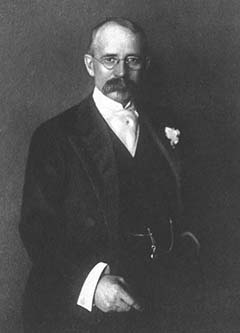
Edward Henry Harriman (February 20, 1848 – September 9, 1909) was an influential American financier and railroad executive. At nearly 50 years old, Harriman became a director of the Union Pacific Railroad in 1897. By May 1898, he was the chairman of the executive committee, effectively becoming the primary decision-maker for the Union Pacific system. In 1903, he assumed the presidency of the company. Harriman also served as the president of the Southern Pacific Railroad from 1901 to 1909, and he envisioned a unified Union Pacific-Southern Pacific railroad—a vision realized when the two railroads merged on September 11, 1996, following approval from the Surface Transportation Board.
Harriman is referenced in the 1969 film Butch Cassidy and the Sundance Kid as the powerful railroad baron whose agents pursue the title characters. In the movie's second train robbery, a railroad employee cites his loyalty to Harriman as his reason for refusing to cooperate with the robbers, while one of the gang's associates describes Harriman's hiring of renowned outlaw hunters to track down the gang leaders. In another 1969 film, The Wild Bunch, a character named Pat Harrigan serves as a stand-in for Harriman.




Ebay ID: labarre_galleries