


Cuban Dominican Sugar Corporation - Day Before the Great Stock Market Crash - October 28, 1929 dated Cuba Stock Certificate
Inv# FS1499 Stock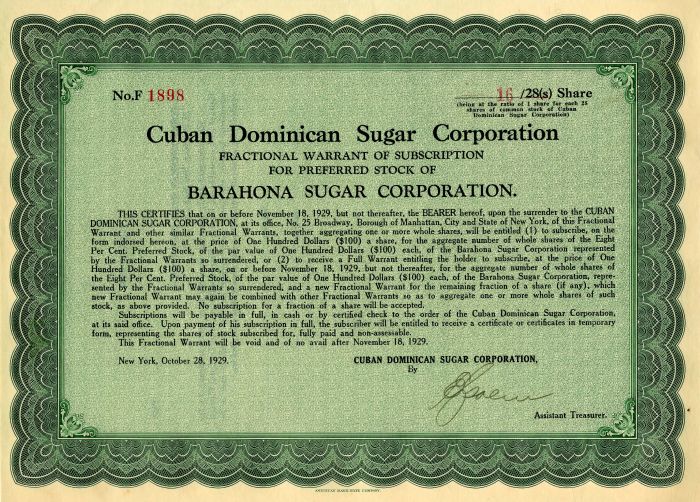
Stock printed by American Bank Note Company. Dated the day before the stock market crash!
The Cuban Dominican Sugar Corporation, a prominent player in the Caribbean sugar industry during the early to mid-20th century, emerged from the consolidation of American interests in both Cuba and the Dominican Republic. Its operations were part of a larger pattern of U.S. business expansion into the region following the Spanish-American War and the subsequent U.S. occupation of the Dominican Republic. In 1933, the company underwent a significant reorganization, leading to the formation of the West Indies Sugar Corporation. This new entity acquired substantial assets, including the Barahona Sugar Company in the Dominican Republic and the Sugar Estates of Oriente, Inc. in Cuba. The reorganization was a response to the financial challenges faced by the original company due to low sugar prices during the Great Depression.
However, the corporation’s Cuban assets were seized following the 1959 Cuban Revolution and the subsequent nationalization of American-owned properties. This forced the controlling families, particularly the Fanjuls, into exile in the United States. In the U.S., they redirected their sugar operations to Florida and the Dominican Republic. The Fanjul family eventually acquired the Dominican company Central Romana Corporation in the 1980s. Today, Central Romana is the Dominican Republic’s largest sugar producer and exporter to the U.S. market. The original Cuban Dominican Sugar Corporation no longer exists, but its legacy continues through Central Romana.
Central Romana has faced significant controversy and U.S. import bans in recent years due to persistent allegations of forced labor and poor living conditions for its workers, a majority of whom are Haitian migrants. These allegations have raised concerns about the company’s practices and have led to scrutiny and legal challenges.
A stock certificate is issued by businesses, usually companies. A stock is part of the permanent finance of a business. Normally, they are never repaid, and the investor can recover his/her money only by selling to another investor. Most stocks, or also called shares, earn dividends, at the business's discretion, depending on how well it has traded. A stockholder or shareholder is a part-owner of the business that issued the stock certificates.




Ebay ID: labarre_galleries