


William Bingham and Tench Francis Jr. signed Philadelphia and Lancaster Turnpike Road Stock dated 1795 with Pass-co Authentication
Inv# PC1008 Stock
With Pass-co Authentication.
The Philadelphia and Lancaster Turnpike, completed in 1795, stands as a remarkable milestone in early American transportation and civil engineering. Chartered by the Pennsylvania General Assembly in 1792, this 62-mile thoroughfare was meticulously designed to connect the agricultural prosperity of Lancaster County with the vibrant port city of Philadelphia. It distinguished itself as the first long-distance, stone-paved road in the United States, constructed according to engineered plans.
Financed entirely by private investors through the Philadelphia and Lancaster Turnpike Company, the road introduced the “turnpike” concept to the nation. It utilized a system of tollgates where travelers had to turn their pikes to allow passage after payment.
The construction of the turnpike revolutionized commerce and set a new standard for infrastructure development in the young republic. Built using a modified version of the Macadam system, the road featured layers of compacted gravel and broken stone over a sloped foundation. This design ensured proper drainage and durability against heavy wagon traffic. The all-weather surface drastically reduced travel times between the two cities from several days to just a single day, significantly lowering shipping costs and boosting regional trade.
The immense commercial success of the turnpike sparked a “turnpike boom” across the Northeastern United States. It demonstrated the viability of private infrastructure and served as a structural blueprint for the development of modern American highways.
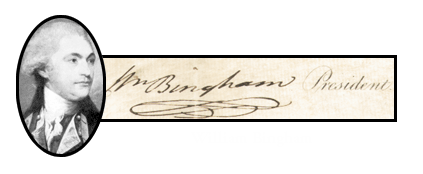
William Bingham (March 8, 1752 – February 7, 1804) was a prominent American statesman, pioneering merchant banker, and land speculator who rose to become one of the wealthiest individuals in the early United States. Born in Philadelphia, he graduated from the College of Philadelphia before serving during the American Revolutionary War as an agent for the Continental Congress in Martinique. In the West Indies, he successfully managed secret wartime intelligence, smuggled crucial military supplies to the colonies, and oversaw highly profitable privateering ventures against British shipping. Upon his return to Philadelphia in 1780, he amassed an immense fortune, establishing himself as America’s first self-made millionaire. With his capital, he founded the Pennsylvania Bank, which later evolved into the Bank of North America—the nation’s first chartered commercial bank. Alongside his wife, Anne Willing, Bingham played a significant role in shaping the social fabric of the new republic, hosting the opulent “Federalist Court” at their grand Philadelphia mansion.
Bingham’s substantial financial influence seamlessly transitioned into a formidable political career and a vast real estate empire during the post-independence era. He expanded his commercial holdings by acquiring millions of acres of frontier lands, including significant tracts in Maine and upstate New York, where the city of Binghamton was named in his honor. Additionally, he served as the inaugural president of the Philadelphia and Lancaster Turnpike Company, which constructed the first major paved highway in the United States. Politically aligned with the Federalist Party, Bingham represented Pennsylvania in the Continental Congress and eventually ascended to the U.S. House of Representatives Biographical Directory. He later served as a United States Senator from 1795 to 1801 and rose to the position of President pro tempore of the Senate. In his later years, he utilized his prestigious transatlantic family connections to facilitate the historic Louisiana Purchase from Napoleon. After retiring from public service, Bingham spent his final years in Bath, England, where he passed away and was laid to rest in 1804.
Tench Francis Jr. (1730–1800) was a prominent merchant, lawyer, and revolutionary patriot who significantly impacted early American financial and military infrastructure. Born in “Fausley” in Talbot County, Maryland, he was the son of Tench Francis Sr., a renowned colonial jurist and attorney general of Pennsylvania. After establishing himself as a successful merchant in Philadelphia, Francis married Ann Willing, thereby connecting his lineage to the influential Willing and Shippen families. For many years, he utilized his legal and business expertise as a trusted agent for the William Penn family, managing their vast proprietary land interests within the province.
During the American Revolutionary War, Francis dedicated his substantial personal fortune to the patriot cause. He famously contributed £5,000 to support the Continental Army. His administrative acumen earned him highly influential public roles in the newly formed nation. He was appointed as the first cashier of the Bank of North America, a crucial wartime institution, and later led the boundary commission responsible for laying out the city grid of Pittsburgh. On February 23, 1795, President George Washington appointed Francis as the nation’s first Purveyor of Public Supplies. This historic executive appointment unified all U.S. Navy pursers under a single director, marking an organizational milestone recognized today as the official birth of the U.S. Navy Supply Corps.
A stock certificate is issued by businesses, usually companies. A stock is part of the permanent finance of a business. Normally, they are never repaid, and the investor can recover his/her money only by selling to another investor. Most stocks, or also called shares, earn dividends, at the business's discretion, depending on how well it has traded. A stockholder or shareholder is a part-owner of the business that issued the stock certificates.




Ebay ID: labarre_galleries